
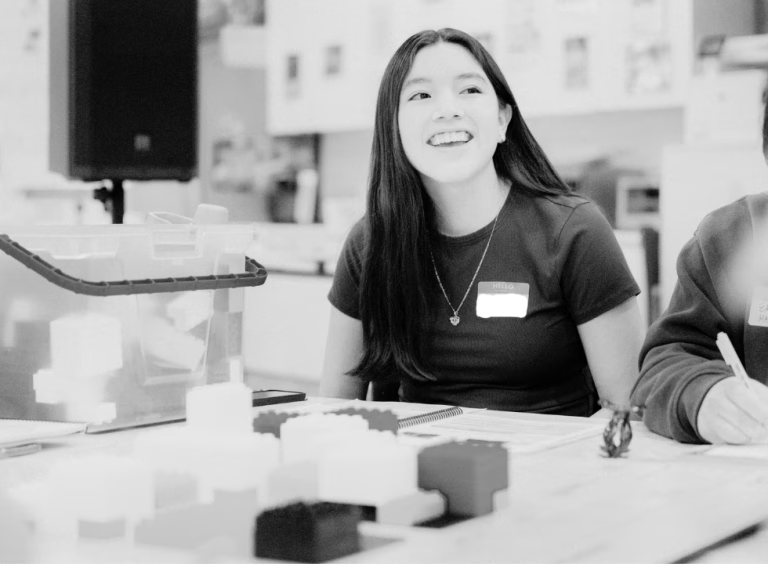
Latina Leaders x DesignⓇ (L2xD) is a national leadership and design program that empowers high school Latinas to explore identity, develop leadership skills, and engage with real community challenges through hands-on, place-based learning experiences. Rooted in the belief that representation and lived experience matter in shaping solutions, L2xD partners with local organizations and industry professionals to help participants connect what they are learning to the communities they come from and care about.
The Power of Community Connected-Learning
Community-connected learning is the belief that learning is strongest when it is grounded in lived experience, relationships, and place. For L2xD, this shows up through intentional partnerships, culturally responsive programming, and real-world challenges that position participants not as observers of their communities, but as emerging contributors to their future.
That distinction is important. L2xD is not designed for participants to simply identify a community problem and create a hypothetical solution. We ask them to look more closely: Why does this issue exist? Who does it affect? What systems are connected to it? Who is already working on it? And, most importantly, where might their own voice and ideas fit?
This summer in Denver, that approach came together particularly well through a partnership with the Urban Land Institute. Nineteen L2xD participants spent two full days learning about urban planning and development alongside professionals in the field. The experience intentionally included Latina representation and built upon conversations participants had already been having about identity, neighborhoods, and what it means to be Latina in their city.
The young women explored affordable housing, redesigned neighborhoods using hands-on activities, presented ideas to a mock city council, and interacted with industry experts. Later, during neighborhood walks, they began noticing their surroundings differently – connecting what they had learned to housing, infrastructure, public spaces, and even the materials used in murals.
One project team took that learning further by focusing on urban heat islands in a Denver neighborhood. Their ideas included architecture, infrastructure, and using reflective materials in public art. What began as exposure to urban planning became something much more valuable: young women recognizing that the built environment around them was not inevitable. Someone made those decisions – and they could someday be among the people helping make them differently.
The Shift from Observation to Student Agency
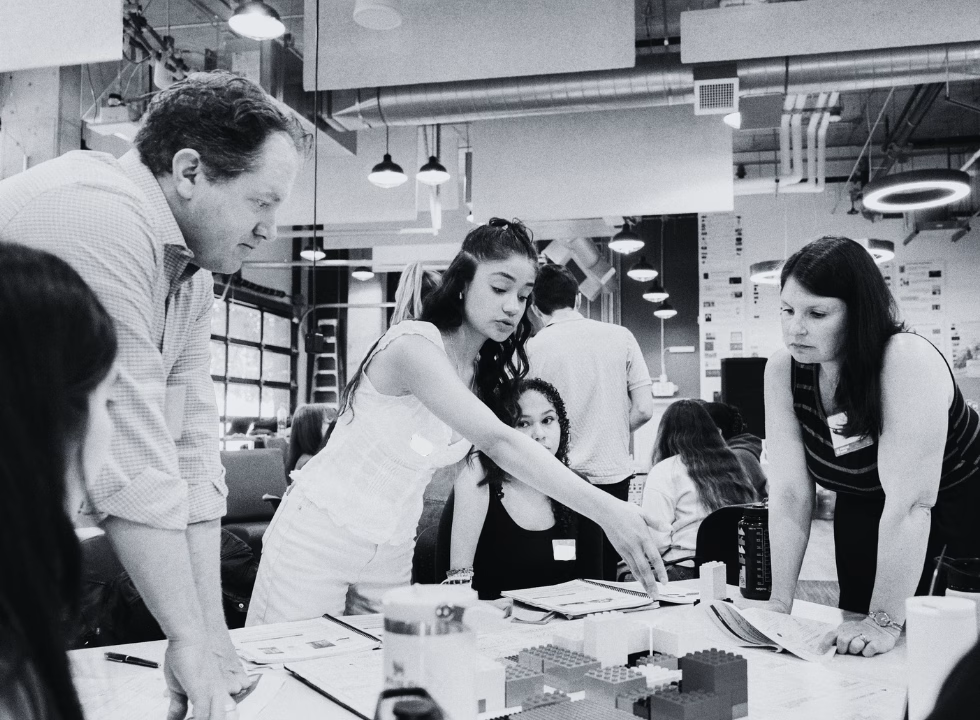
That shift from observation to agency is something we are seeing across all L2xD summer programming. In San Antonio, our 2026 post-program data showed that 96% of respondents believed they could make a positive impact in their community and 96% felt able to lead a project from start to successful finish. Participants worked on issues including mental health, immigration, homelessness, education, food insecurity, public safety, and access to resources. In Detroit, participants also grew in identifying community problems, presenting ideas, speaking up, and moving from simply talking about problems to taking action.
This is where I believe community-connected learning becomes particularly powerful for young women. We are not only building leadership skills. We are helping them understand that they are already members of communities in which they have knowledge, experiences, relationships, and a voice.
Lessons Learned
For program leaders, one of our biggest lessons has been to leave room for that connection to happen authentically. Curriculum provides the framework, but facilitators need the flexibility to respond to the girls, the community, current events, and opportunities that emerge locally. Strong community partners should do more than provide a tour or presentation; they should invite young people into the conversation. And young people should be pushed beyond the easiest solution to ask deeper questions about why a problem exists in the first place.
