
Before a single student walks through the front doors of Woodbridge Elementary School this fall, something important is already taking shape.
Not the classrooms.
Not the schedules.
Not even the curriculum.
It’s the culture.
Every new school begins with fresh paint, new furniture, and carefully planned spaces. Much less often does it begin with the intentional design of how adults will learn together, solve problems together, and create the kind of environment they hope every child experiences.
Intentional Culture-Building at Woodbridge Elementary
Woodbridge Elementary, a brand-new school in Prince William County Public Schools, chose to start there.
Principal Brooke Levecchi recognized that opening a new building with a new staff and a new student community presented a rare opportunity. Before traditions existed, before routines became habits, educators could intentionally build the culture they wanted to live every day – not simply inherit one over time.
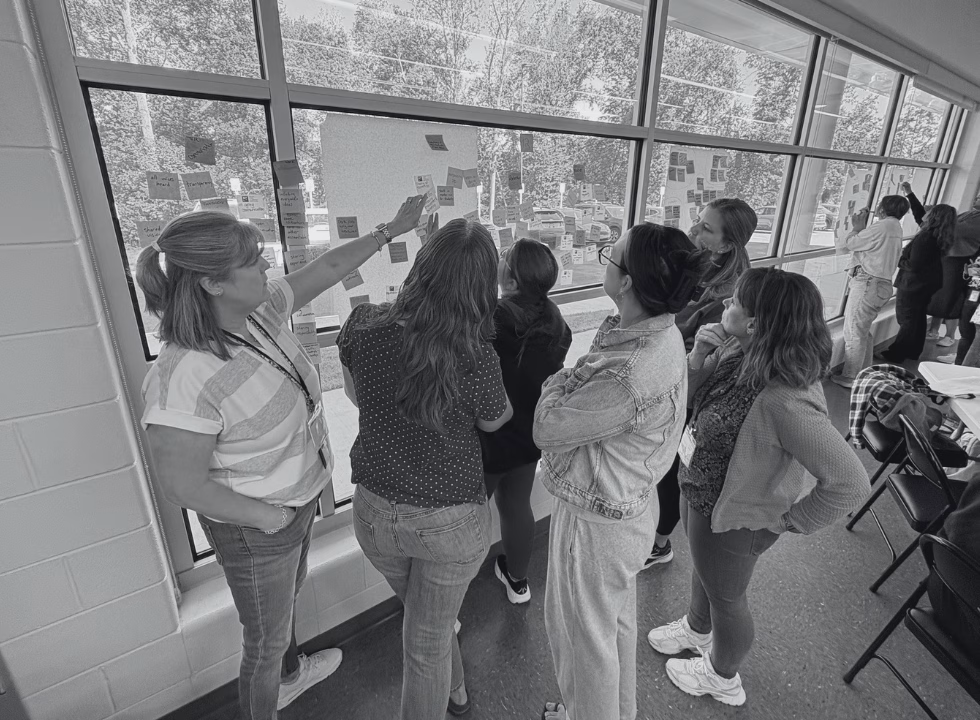
That vision led the Woodbridge team to partner with Henry Ford Learning Institute (HFLI) to begin the school’s journey through a three-day immersive experience, the Design Thinking for Deeper Student Learning workshop.
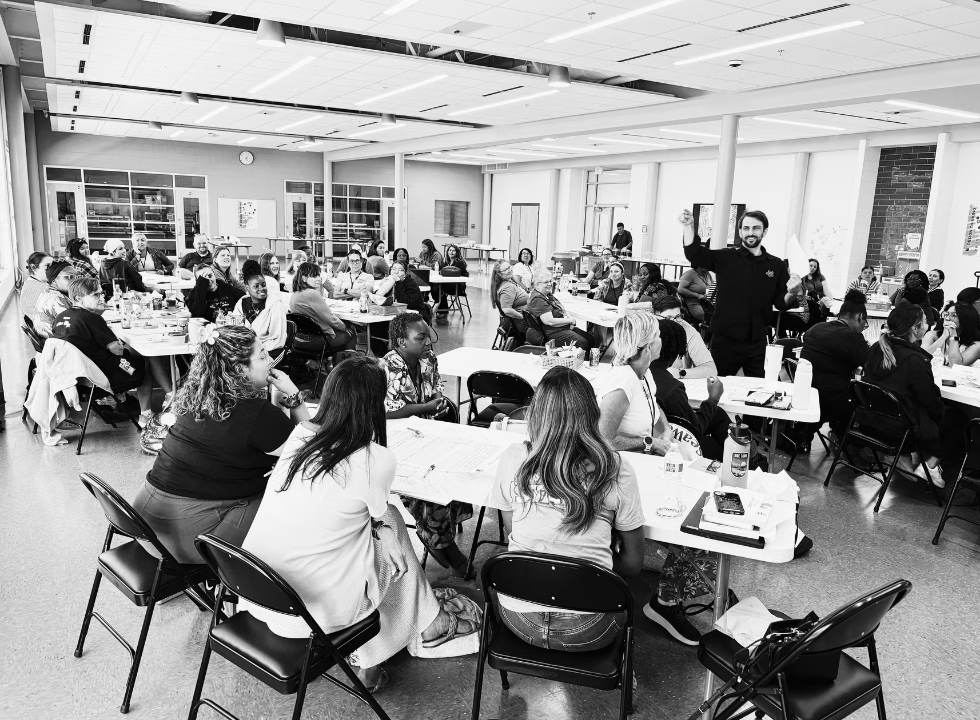
Unlike many professional learning experiences, this one did not begin with a presentation. It began with participation.
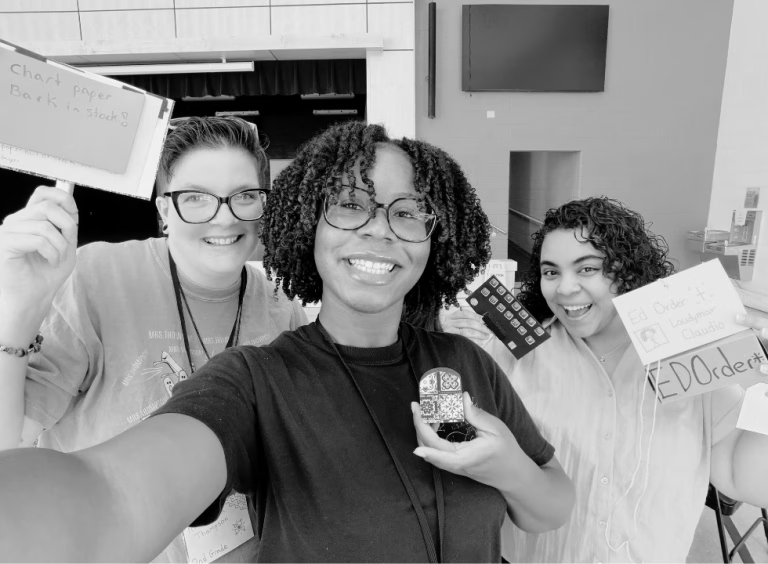
Teachers, counselors, interventionists, instructional coaches, curriculum specialists, special education staff, and school leaders worked side by side, experiencing the same uncertainty, curiosity, and discovery they hope students will experience.
At HFLI, Design Thinking is not viewed as a prescribed sequence of steps. It is a collection of mindsets, methods, and behaviors that help people explore complex challenges creatively, reframe assumptions, and take thoughtful action through learning by doing. The work is intentionally human-centered, collaborative, and non-linear.
One participant reflected, “Failure wasn’t a destination but a fluid part of the process.” Another shared, “Thank you for giving us more tools to help our students be lifelong learners.”
Toward the end of the experience, participants tackled a shared challenge:
How might we design a strong and effective way to work together and learn together?
Rather than focusing on individual classrooms, teams envisioned how an entire school community could collaborate, celebrate progress, and continue learning together. Many of those ideas are now being considered as Woodbridge prepares to welcome its first students.
Continuing the Work
Throughout the coming year, HFLI will continue partnering with Woodbridge through coaching and virtual learning sessions that respond to the team’s evolving questions and opportunities.
School culture is not something educators simply discover. It is something they intentionally design – through the questions they ask, the relationships they build, the risks they encourage, and the opportunities they create for young people to think deeply and contribute meaningfully.