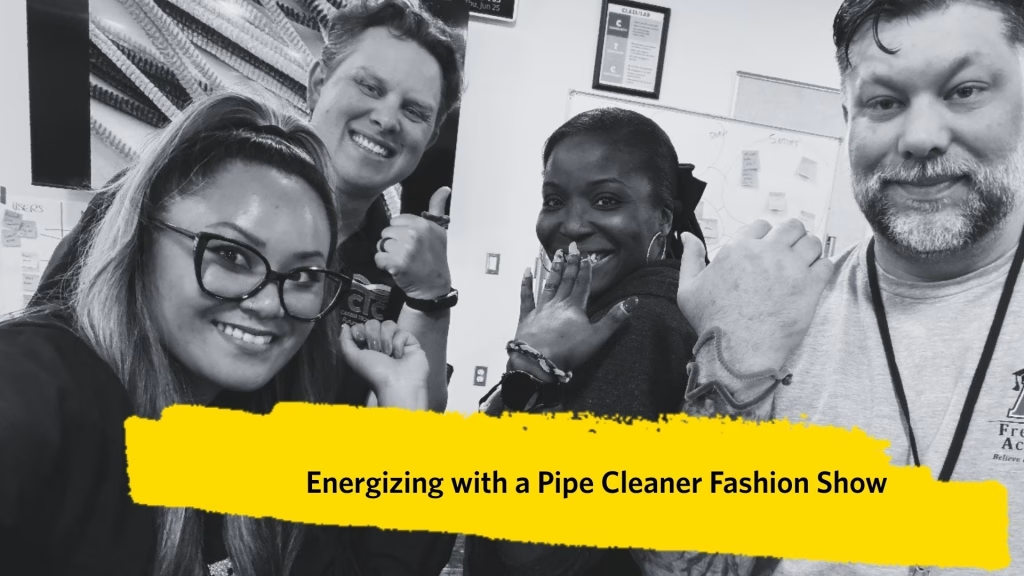
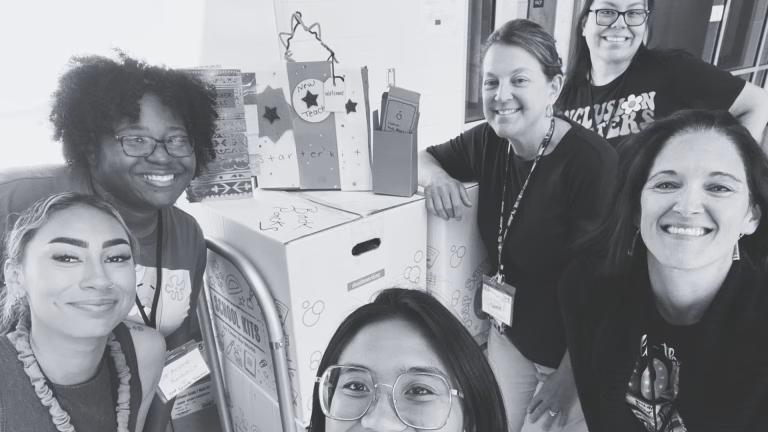

One of Henry Ford Learning Institute’s most popular ways of supporting schools, districts, and colleges is Design Thinking for Deeper Student Learning, a 3-day immersive workshop for educators who want to create more student-centered, engaging, and meaningful learning experiences.
The workshop is hands-on from the start. Participants experience the design process themselves, practice with tools they can use with students and colleagues, and explore how Design Thinking can support belonging, creativity, problem-solving, and deeper learning. Along the way, they also make space for connection and joy through creative play, conversation prompts, team challenges, and stoking activities that can be adapted for classrooms, staff meetings, and professional learning.
Over the past few weeks, HFLI facilitated Design Thinking for Deeper Student Learning with two groups nearly 700 miles apart. One group was preparing to open a brand-new school. The other was continuing a districtwide Design Thinking journey that has been growing for years. Together, these experiences show how the workshop can meet educators where they are and help them move their work forward.
Curious what HFLI means by Design Thinking?
We define Design Thinking as a collection of mindsets and methods that help people explore challenges creatively, reframe problems, and take action. For us, it is not only about thinking differently. It is also about trying ideas, learning from others, and putting new possibilities into motion — what we often call “design doing.”
Launching Design Thinking at a New School
Woodbridge Elementary, opening in a few short months, is a new addition to Prince William County Schools in Virginia. As Principal Brooke LeVecchi envisioned the school’s facility and educational model, she wanted to build more than a new building. She wanted to create a student-centered school community grounded in belonging, inclusivity, creativity, and care.
To support that vision, Woodbridge Elementary partnered with HFLI for a year-long professional learning series designed to help faculty develop a shared Design Thinking practice rooted in culturally restorative practices.
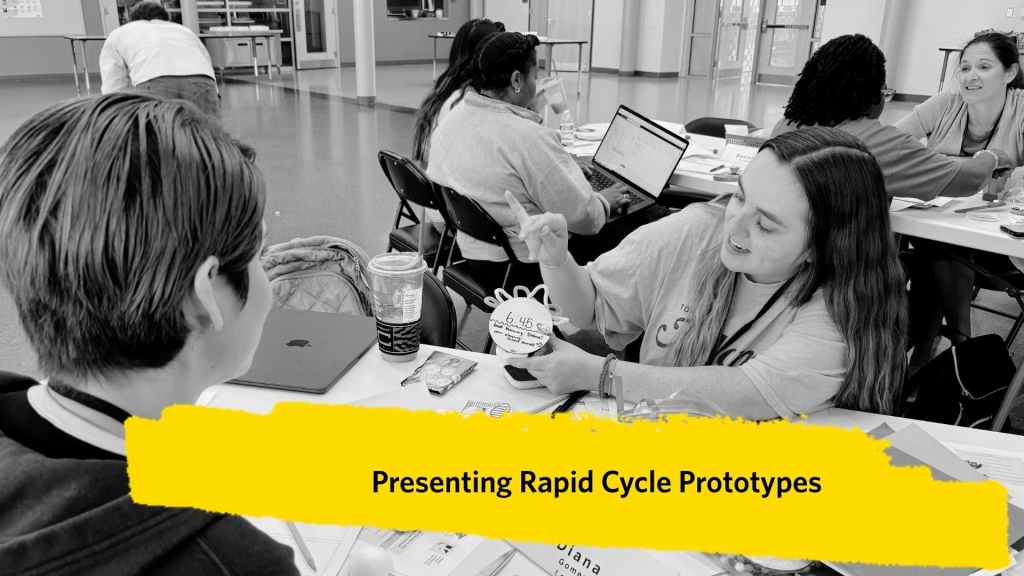
The work began with Design Thinking for Deeper Student Learning, where 75 Woodbridge educators explored tools, mindsets, and methods they can use in learning experiences, student projects, professional development, and school culture. On the first day, participants jumped into a Rapid Cycle Design Challenge, a fast-paced introduction to the full design process.
As HFLI Executive Director and lead facilitator Deborah Parizek explained, the goal was not to master every step right away. It was to experience the process, notice what it asks of learners, and build a foundation for deeper practice over time.
That kind of beginning matters for a new school. Before students even enter the building, the Woodbridge team is building common language, shared practices, and a culture of creativity and reflection that can shape how adults and students learn together.
Deepening Design Thinking Across a District
MAISD, a regional educational service agency that provides leadership, specialized programs, and operational support to public, charter, and non-public schools across Muskegon County, Michigan, has been growing a Design Thinking community of practice for more than 10 years with support from HFLI.
For the fifth year in a row, HFLI traveled to Muskegon to facilitate Design Thinking for Deeper Student Learning with MAISD educators. Some participants were new to Design Thinking, while others returned with experience and classroom-tested strategies to share.
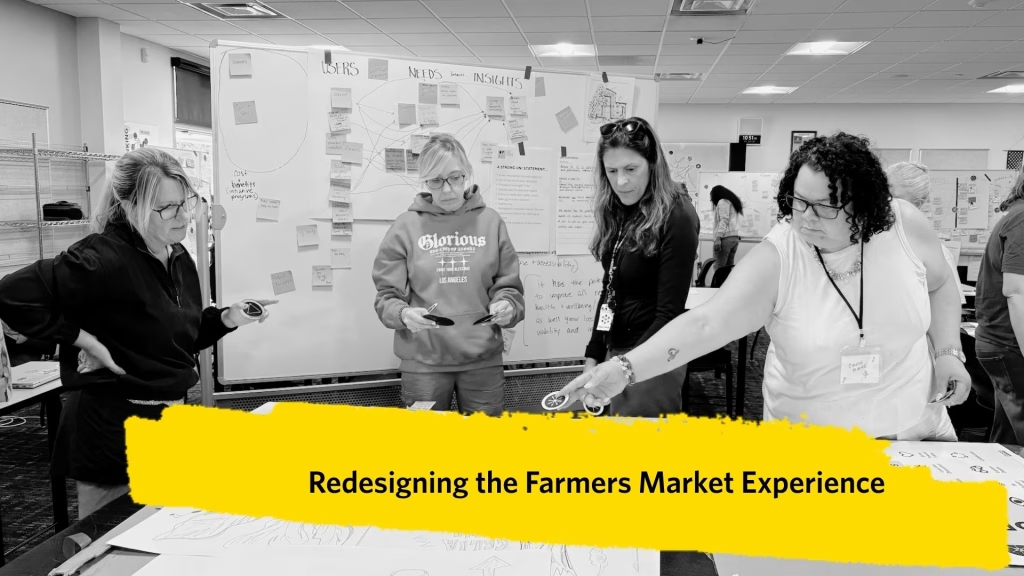
After an introductory Rapid Cycle Design Challenge, teams moved into a Deep Dive experience connected to the Muskegon Farmers Market. Their challenge was to design a way to improve the market experience for a specific user. During fieldwork at the market, teams observed the environment, talked with visitors, customers, vendors and community leaders, gathering perspective and insights before returning to home base to develop and share solution ideas.
This kind of community-connected challenge helps educators experience what deeper learning can feel like: listening closely, making sense of real needs, working with others, testing ideas, and using feedback to improve.
The workshop also created opportunities for local leadership. Two experienced MAISD Design Thinking educators were coached, then led select activities and supported their colleagues throughout the experience. In doing so, they strengthened their own facilitation skills while helping the broader community of practice continue to grow.
Tailoring the Experience
Every HFLI learning experience begins with listening. Before we facilitate Design Thinking for Deeper Student Learning, we work with partners to understand their goals, challenges, timeline, participants, and local context. That helps us shape the workshop so it is relevant, practical, and connected to the work educators are already doing.
For Woodbridge Elementary, the 3-day workshop served as the launch of a year-long learning series. Because the school is building a new community from the ground up, we were able to spend additional time on empathy, belonging, and culturally restorative practices.
For MAISD, the workshop included both educators new to Design Thinking and returning participants ready to deepen their practice. To meet that mix of needs, HFLI introduced new tools and activities while also planning with experienced local Design Thinking educators so they could help lead parts of the workshop, support colleagues, and continue building facilitation skills.
Whether a team is just beginning or ready to expand an existing Design Thinking practice, the workshop is designed to help educators experience the process, apply practical tools, and imagine new possibilities for student learning.
Contact us at designthinking@hfli.org to learn more about bringing Design Thinking for Deeper Student Learning to your school, district, college, or nonprofit.